레이블이 교육인 게시물을 표시합니다. 모든 게시물 표시

2018년 4월 18일 수요일

[플라즈마 물리][Plasma Physics]CH1 Introduction - Plasma Frequency

"배워서 남주자"라는 가치를 가진 산동일크무크를 응원해주세요!

[Youtube Link]

Plasma Frequency

Consider a hypothetical slab of plasma, where we assume that the ions have infinite mass(immobile) and the electrons can move freely through the ions.

  1. Suppose the electron slab is displaced a distance \(x\) to the right of the ion slab and then allowed to move freely.

  2. An electric field will be set up, causing the electron slab to be pulled back toward the ions.

  3. When the electrons exactly overlap the ions (when \(x=0\)), the net force is zero, but the electron slab overshoots.

  4. The net result is harmonic oscillation. The frequency of the oscillation is called the electron plasma frequency.

Derivation for Plasma Frequency

From Gauss’s law,

\[\oint \vec{D} \cdot d\vec{a} = Q\]

we have

\[\epsilon_0 EA = neAx\]

or

\[E=\frac{nex}{\epsilon_0}\]

Since the force is given by

\[F=QE=(-neAx)(\frac{nex}{\epsilon_0})=nAxm_e \frac{d^2x}{dt^2}\]

we obtain the equation of motion

\[\begin{aligned} \frac{d^2x}{dt^2} = - \left( \frac{ne^2}{m_e \epsilon_0} \right) x\end{aligned}\]

or

\[\begin{aligned} \frac{d^2x}{dt^2} +\omega_{pe}^2x=0\end{aligned}\]

where

\[\begin{aligned} \boxed{\omega_{pe}=\sqrt{\frac{ne^2}{m_e \epsilon_0}}}\end{aligned}\]

This is electron plasma frequency.
\(\bullet\) If there are no collisions, the disturbance will oscillate indefinitely.
\(\bullet\) Debye length, thermal velocity, and plasma frequency are inter-related.

\[\frac{v_{th}}{\omega_{pe}}=\frac{\sqrt{\frac{K_BT}{m}}}{\sqrt{\frac{ne^2}{m\epsilon_0}}}=\sqrt{\frac{\epsilon_0 KT}{ne^2}}=\lambda_D\]

4차 산업혁명에 걸맞는 인터넷 기반 고등교육기관

이메일: ilkmooc@ilkmooc.kr

홈페이지주소: http://ilkmooc.kr

산동일크무크란? https://goo.gl/FnvqXd

2018년 4월 17일 화요일

[플라즈마 물리][Plasma Physics]CH1 Introduction - Plasma Parameter

"배워서 남주자"라는 가치를 가진 산동일크무크를 응원해주세요!

[Youtube Link]

Plasma Parameter

\(\bullet\) The plasma parameter is defined as

\[\begin{aligned} \boxed{ N_D =n\frac{4}{3}\pi \lambda_D^3 }=1.38 \times 10^6 \frac{T^{\frac{3}{2}}}{n^{\frac{1}{2}}} [T](in^{\circ}K)\end{aligned}\]

which is the number of plasma particles in a Debye sphere.

\(\bullet\) For Debye shielding to occur, and for the description of a plasma to be statistically meaningful, the number of particles in a Debye sphere must be large; that is \(N_D>>1\)

\(\bullet\) Plasma parameter is a measure of the ratio of the mean plasma kinetic energy to potential energy.

\[\frac{K.E.}{P.E.} \simeq \frac{\frac{3}{2}K_BT}{\frac{e^2}{4\pi\epsilon_0 \lambda_D}} \simeq \frac{9}{2}N_D >> 1\]

\(\bullet\) Thus \(N_D>>1\) means that the potential energy of a particle due to its nearest neighbor is much smaller than its kinetic energy. If this were not the case, there would be a strong tendency for electrons and ions to bind together into atoms, thus destroying the plasma.

\(\bullet\) An ideal gas corresponds to zero potential energy between the particles. Since the plasma parameter is large, the plasma may be treated as an ideal gas of charged particles, that is, a gas that can have a charge density and electric field but in which no two discrete particles interact.

\(\bullet\) In deriving the Debye potential, we assumed that the electrostatic energy was small compared to the thermal energy. The largeness of the plasma parameter guarantees the validity of the Debye potential.

4차 산업혁명에 걸맞는 인터넷 기반 고등교육기관

이메일: ilkmooc@ilkmooc.kr

홈페이지주소: http://ilkmooc.kr

산동일크무크란? https://goo.gl/FnvqXd

2018년 4월 12일 목요일

[플라즈마 물리][Plasma Physics]사하 공식 Saha Equation

Saha Equation

\(\bullet\) We live in a small part of the universe where plasmas do not occur naturally; otherwise we would not be alive. The reason for this can be seen from the Saha equation, which tells us the amount of ionization to be expected in a gas in thermal equilibrium. \[\begin{aligned} \label{eq_1} \frac{n_i}{n_n} \simeq 2.4 \times 10^{21} \frac{T^{\frac{3}{2}}}{n_i}e^{\frac{-U_i}{KT}} \end{aligned}\]

where \(n_i\) and \(n_n\) are density(number per \(m^3\)) of ionized atoms and of neutral atoms, respectively. \(T\) is the gas temperature in \(^{\circ}K\), \(K\) is Boltzmann’s constant; \(1.38 \times 10^{-23} [\frac{J}{^{\circ}K}]\), and \(U_i\) is the ionization energy of the gas - that is, the number of joules required to remove the outermost electron from an atom.
In room temperature, \(n_n \simeq 3 \times 10^{25}[m^{-3}]\), \(T \simeq 300 ^{\circ}K\), and \(U_i = 14.5eV\) for nitrogen, where \(1eV = 1.6 \times 10^{-10}[J]\). The fractional ionization \(\frac{n_i}{n_n+n_i}\simeq \frac{n_i}{n_n}\) is rediculously low:

\[\begin{aligned} \frac{n_i}{n_n}\simeq 10^{-122}\end{aligned}\]

Let us define degree of ionization \[\alpha = \frac{n_e}{n_e+n_n}\]. Where \(n_e=n_i\) is the number of electrons or ions per volume [\(cm^3\)], and \(n_n\) is the number of neutrals per volume [\(cm^3\)].

  • \(\alpha << 1\): weakly ionized situation (low temp)

  • \(\alpha = 1\): fully ionized (high temp)

Trend of Saha equation tells us how fractional ionization changes depending on the temperature. As the temperature increases, the ionization increases significantly.

  • \(\frac{n_e}{n_n}\rightarrow 0\) at \(K_BT << U_i\)

  • \(\frac{n_e}{n_n}>> 0\): as \(K_BT >> U_i\)

where again, \(U_i\) is the ionization energy and \(K_BT: T_e \simeq T_i\)

4차 산업혁명에 걸맞는 인터넷 기반 고등교육기관

이메일: ilkmooc@ilkmooc.kr

홈페이지주소: http://ilkmooc.kr

산동일크무크란? https://goo.gl/FnvqXd

2018년 4월 9일 월요일

[플라즈마물리]Single Particle Motion - E cross B drift

Problem Consider a particle of charge \(q\) and mass \(m\), initially at rest at (0,0,0), in the presence of a static magntic field \(\vec{B}=B\hat{z}\) and \(\vec{E}=E\hat{y}\).

(a) Taking \(E, B > 0\), sketch the orbit of the particle when \(q>0\).

(b) Derive an exact expression for the orbit \([x(t),y(t),z(t)]\) or the particle. Express your answer in terms of \(E\), \(B\), and \(\omega_c\)

(c) Find the drift velocity after averaging the motion in time. If there were many particles of various charges and masses present, would there be any net current?

(d) Suppose the electric field were replaced by a force \(F\) in the \(y\)-direction. What would be the drift velocity?

Answer (a)

Answer (b)

\(\vec{B}=B\hat{z}\) and \(\vec{E}=E\hat{y}\). From Lorentz equation,

\[m\frac{dv}{dt}=q(\vec{E} + \vec{v}\times \vec{B})\]

\[\begin{aligned} \dot{v_x}&= \quad \quad \quad \quad \frac{q}{m}v_y B \nonumber \\ \dot{v_y}&= \frac{q}{m}\vec{E_y} - \frac{q}{m}v_xB \nonumber \\ \dot{v_z}&= 0\end{aligned}\]

In z-direction \[z(t) = constant = 0\]

\[\begin{aligned} \frac{dv_x}{dt} &= \frac{qB}{m}v_y = \omega_c v_y \nonumber \\ \frac{dv_y}{dt} &= \frac{qE}{m}-\frac{qB}{m}v_x = \frac{qE_y}{m}-\omega_c v_x \nonumber\end{aligned}\]

\[\begin{aligned} \frac{d^2 v_y}{dt^2} &= -\omega_c^2 v_y \nonumber \\ \frac{d^2 v_x}{dt^2} &= -\omega_c^2 \left(v_x-\frac{E}{B} \right) \nonumber\end{aligned}\]

since \(\frac{E}{B}\) is constant, \[\frac{d^2}{dt^2} \left[ v_x-\frac{E}{B} \right] = \frac{d^2 v_x}{dt^2} = -\omega_c^2 \left(v_x-\frac{E}{B} \right)\]

\[\begin{aligned} v_x &= iv_{\perp}e^{i\omega_c t} + \frac{E}{B}\nonumber \\ v_y &= v_{\perp}e^{i\omega_c t} \nonumber \end{aligned}\]

\[\begin{aligned} x(t) &= x(0) + r_L \cos{\omega_c t} +\frac{E}{B}t \nonumber \\ y(t) &= y(0) + r_L \sin{\omega_c t} \nonumber \end{aligned}\]

Answer (c)

\[<v_d> = \frac{\int_{-\infty}^{\infty}v_d f(v) dv}{\int_{-\infty}^{\infty}f(v) dv} = \frac{E}{B}\]

There will be no current because \(\vec{E} \times \vec{B}\) drifts the ions and electrons in the same direction.

Answer (d)

\[\begin{aligned} \vec{v_f}&= \frac{1}{q} \frac{\vec{F} \times \vec{B}}{B^2} \nonumber \\ &=\frac{FE}{qB}\hat{y}\end{aligned}\]

4차 산업혁명에 걸맞는 인터넷 기반 고등교육기관

이메일: ilkmooc@ilkmooc.kr

홈페이지주소: http://ilkmooc.kr

산동일크무크란? https://goo.gl/FnvqXd

2018년 4월 8일 일요일

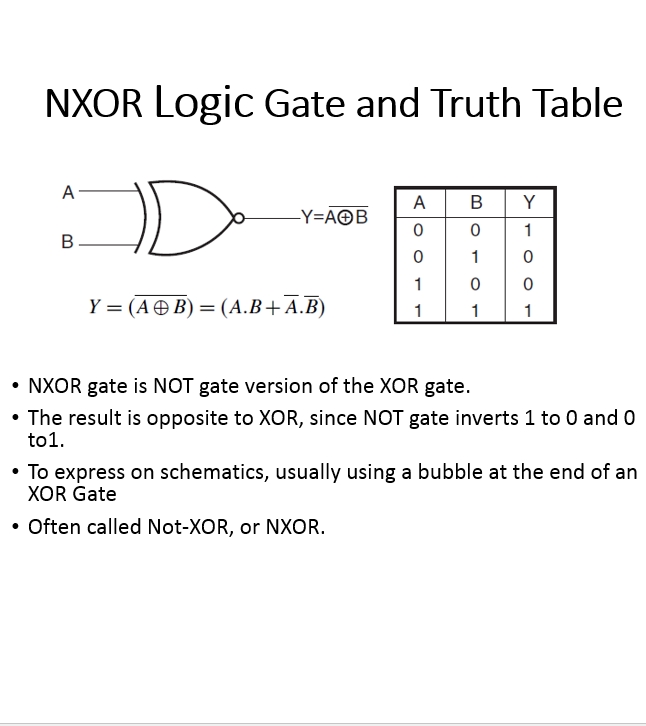
프로젝트 팀: 논리설계 카드뉴스

산동일크무크 프로젝트 팀: 논리설계 카드뉴스


산동일크무크 그룹 프로젝트 팀장이 이끄는 팀에서 (학부생 그룹) 지난번에 이어 두번째 카드뉴스를 만들어보았습니다.  앞으로도 다양한 컨텐츠를 만들어 배포할 수 있었으면 좋겠습니다.


4차 산업혁명에 걸맞는 인터넷 기반 고등교육기관

이메일: ilkmooc@ilkmooc.kr

홈페이지주소: http://ilkmooc.kr

산동일크무크란? https://goo.gl/FnvqXd


[대학원-전자기학]Vector Calculus Problem 2

Problem 2: Prove \(-\nabla \frac{1}{|\vec{r}-\vec{r}\prime|}=\frac{\vec{r}-\vec{r}\prime}{|\vec{r}-\vec{r}\prime |^3}\)

Let \[\vec{r}=x_1\hat{x} + y_1\hat{y} + z_1\hat{z}\] \[\vec{r}\prime=x_2\hat{x} + y_2\hat{y} + z_2\hat{z}\] \[\zeta =(\vec{x_1}-\vec{x_2})^2+(\vec{y_1}-\vec{y_2})^2+(\vec{z_1}-\vec{z_2})^2\]

\[\nabla \frac{1}{|\vec{r}-\vec{r}\prime|} = \frac{\partial}{\partial x}\hat{x} + \frac{\partial}{\partial y}\hat{y} + \frac{\partial}{\partial z}\hat{z}\frac{1}{|\vec{r}-\vec{r}\prime|}\]

Let us consider only \(\hat{x}\) components. \[\begin{aligned} \frac{\partial}{\partial x}\hat{x}\frac{1}{\zeta^{\frac{1}{2}}} &= \frac{1}{2}\zeta^{-\frac{3}{2}}\zeta\prime \nonumber \\ &=\frac{x_1 - x_2}{\zeta^{\frac{3}{2}}}\hat{x} \nonumber \\ &=\frac{x_1 - x_2}{|\vec{r}-\vec{r}\prime|^3}\hat{x} \nonumber\end{aligned}\]

Same procedure occur for the other two component. When we add all, final result become \[-\nabla \frac{1}{|\vec{r}-\vec{r}\prime|}=\frac{\vec{r}-\vec{r}\prime}{|\vec{r}-\vec{r}\prime |^3}\]

4차 산업혁명에 걸맞는 인터넷 기반 고등교육기관

이메일: ilkmooc@ilkmooc.kr

홈페이지주소: http://ilkmooc.kr

산동일크무크란? https://goo.gl/FnvqXd

[대학원-전자기학]Vector Calculus Problem 1

Problem 1: Prove \(\nabla \times \frac{\vec{r}-\vec{r}\prime}{|\vec{r}-\vec{r}\prime |^3}=0\)

Answer:
\[\nabla \times \frac{\vec{r}-\vec{r}\prime}{|\vec{r}-\vec{r}\prime |^3}= \begin{vmatrix} \hat{x} & \hat{y} & \hat{z} \\ \frac{\partial}{\partial x} & \frac{\partial}{\partial y} & \frac{\partial}{\partial z} \\ \frac{x_1-x_2}{|\vec{\eta}^3|} & \frac{y_1-y_2}{|\vec{\eta}^3|} & \frac{z_1-z_2}{|\vec{\eta}^3|} \end{vmatrix}\] Where \[\vec{r}=x_1\hat{x} + y_1\hat{y} + z_1\hat{z}\] \[\vec{r}\prime=x_2\hat{x} + y_2\hat{y} + z_2\hat{z}\] \[\vec{\eta} = \vec{r}-\vec{r}\prime\], \[|\vec{\eta}|=\sqrt{(\vec{x_1}-\vec{x_2})^2+(\vec{y_1}-\vec{y_2})^2+(\vec{z_1}-\vec{z_2})^2}\] \[\zeta =(\vec{x_1}-\vec{x_2})^2+(\vec{y_1}-\vec{y_2})^2+(\vec{z_1}-\vec{z_2})^2\] \[\begin{aligned} \nabla \times \frac{\vec{r}-\vec{r}\prime}{|\vec{r}-\vec{r}\prime |^3} &= (\frac{\partial}{\partial y}(\frac{z_1-z_2}{|\vec{\eta}^3|})-\frac{\partial}{\partial z}(\frac{y_1-y_2}{|\vec{\eta}^3|}))\vec{x} \nonumber \\ & -(\frac{\partial}{\partial x}(\frac{z_1-z_2}{|\vec{\eta}^3|}) - \frac{\partial}{\partial z}(\frac{x_1-x_2}{|\vec{\eta}^3|}))\vec{y} \nonumber \\ & +(\frac{\partial}{\partial x}(\frac{y_1-y_2}{|\vec{\eta}^3|})-\frac{\partial}{\partial y}(\frac{x_1-x_2}{|\vec{\eta}^3|}))\vec{z} \nonumber\end{aligned}\]

Since \[\frac{\partial}{\partial y}(\frac{z_1-z_2}{|\vec{\zeta}^{\frac{3}{2}}|})=-3\frac{(z_1 - z_2)(y_1 - y_2)}{|\vec{\zeta}^{\frac{5}{2}}|}\]

\[\frac{\partial}{\partial z}(\frac{y_1-y_2}{|\vec{\zeta}^{\frac{3}{2}}|})=-3\frac{(y_1 - y_2)(z_1 - z_2)}{|\vec{\zeta}^{\frac{5}{2}}|}\]

They cancel out each others. Same procedure occur for the other two components. Hence, \(\nabla \times \frac{\vec{r}-\vec{r}\prime}{|\vec{r}-\vec{r}\prime |^3}=0\)

4차 산업혁명에 걸맞는 인터넷 기반 고등교육기관

이메일: ilkmooc@ilkmooc.kr

홈페이지주소: http://ilkmooc.kr

산동일크무크란? https://goo.gl/FnvqXd

2018년 4월 6일 금요일

프로젝트 팀: 논리설계 카드뉴스


산동일크무크 프로젝트 팀: 논리설계 카드뉴스


산동일크무크 그룹 프로젝트 팀장이 이끄는 팀에서 (학부생 그룹) 아래와 같이 카드뉴스를 만들어 보았습니다.  앞으로도 다양한 컨텐츠를 만들어 배포할 수 있었으면 좋겠습니다.


4차 산업혁명에 걸맞는 인터넷 기반 고등교육기관

이메일: ilkmooc@ilkmooc.kr

홈페이지주소: http://ilkmooc.kr

산동일크무크란? https://goo.gl/FnvqXd